Menu of the month: April

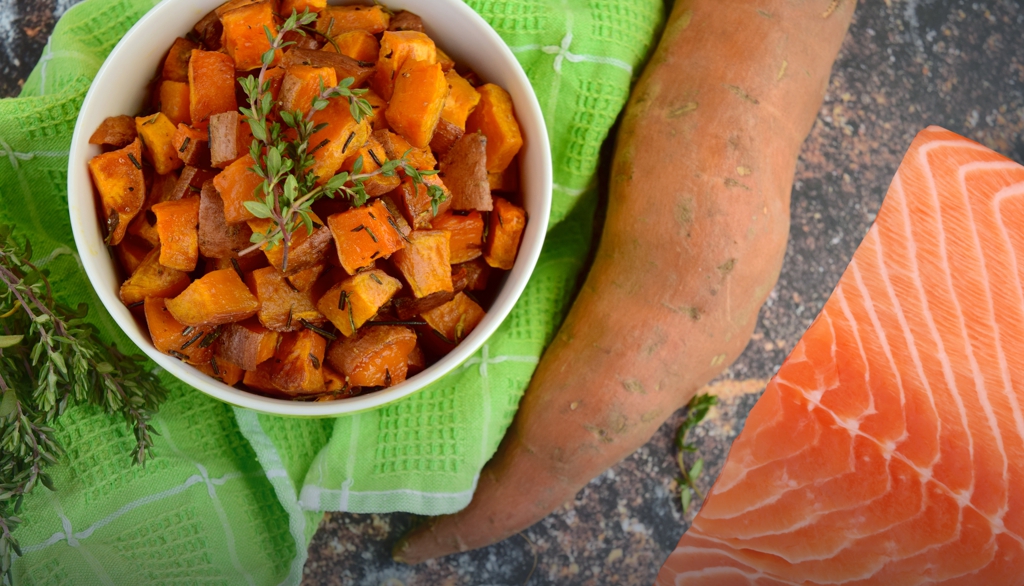
Tandoori-style trout with spiced sweet potatoes

This delicious trout dish is inspired by a recipe from Rukmini Iyre’s cookbook The Quick Roasting Tin.


Serves 4

Ingredients

For the Trout
3 cloves of garlic, grated
A 4cm piece of ginger, grated
75g of natural yoghurt
Zest of 1 lemon
2 tsp ground cumin
1 tsp of ground turmeric
1 tsp smoked paprika
½ tsp of mild chilli powder
Pinch of sea salt
4 trout fillets

For the sweet potatoes
650g of peeled sweet potatoes cut into 1cm cubes
2 tbs vegetable oil
1 tsp of ground cumin
1 tsp sea salt
400g cherry tomatoes on the vine
1 sliced red onion


Method

Mix together the garlic, ginger, yoghurt, lemon zest, spices and salt. Cover the trout in the mixture and set aside. They can be marinated in the fridge ahead of time.
Preheat the oven to 210°C (fan)/ 230°C. Place the sweet potato cubes in a single layer in a large roasting tray. Mix them in the oil, cumin and salt and roast for 10 minutes.
After this time, remove the tray and add the cherry tomatoes on the vine and the sliced onion and mix them with the potatoes. Make 4 spaces in the vegetable mix for the trout and place them into the spaces.
Reduce the heat to 180°C (fan)/200°C and put the tray back in the oven for 20 minutes.

Serve the trout dish with more natural yoghurt and a glass of Poulton Hill’s Arlington White 2018.

For information about Rukmini Iyer, her recipes and where to buy her books, visit: https://www.rukmini-iyer.com/

Popular Pinot Noir

British winemakers’ growing love for a cool red


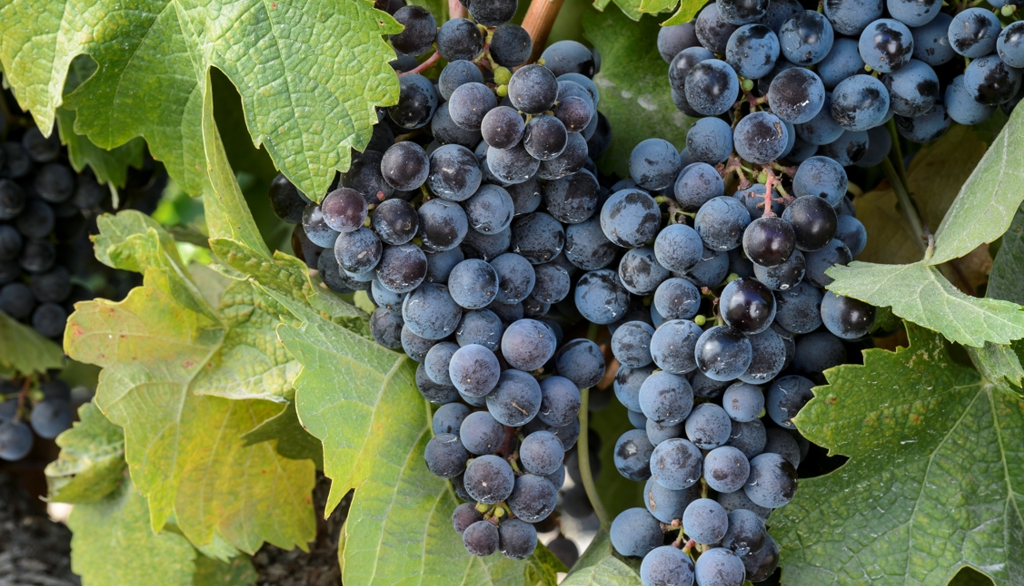
We are increasing the number of rows of Pinot Noir vines at Poulton Hill, which is really exciting for us.

Pinot Noir is one of the oldest grape varieties in the world and is now the most widely planted red grape in British vineyards, according to Wine GB (the national body for grape growers and winemakers). There are some very good reasons for this.

First of all, Pinot Noir grows very well in cooler climates and ripens relatively early. It is perhaps best-known as the red grape of the Burgundy region of France, which produces wines with flavours of cherry and red berries. This light to medium-bodied red wine can be served at room temperature, like most red wines, or it can be served slightly chilled. This makes it an excellent alternative to white and rosé wines on warm days and means it can pair with foods that would traditionally be partnered with these wines too. In fact, it pairs really well with full-flavoured fish, so it is the perfect wine to serve with trout from our sister company, Bibury Trout Farm.

Second, Pinot Noir is really versatile. Not only can it be used for a single grape wine, it is also the perfect grape to blend in sparkling wines. Some famous French Champagnes, such as Pol Roger, are made with Pinot Noir. It has also been used to produce rosé wines, so winemakers can use the grapes in a variety of different wines.

However, we have to take great care of our Pinot Noir vines. It is not the easiest grape to grow. The berries are thin-skinned, are sensitive to fluctuations in temperature and are susceptible to sunburn, rot, fungus and mildew. But with the right care and attention, we should produce a beautiful red wine. We look forward to sharing it with you.

Menu of the Month: January

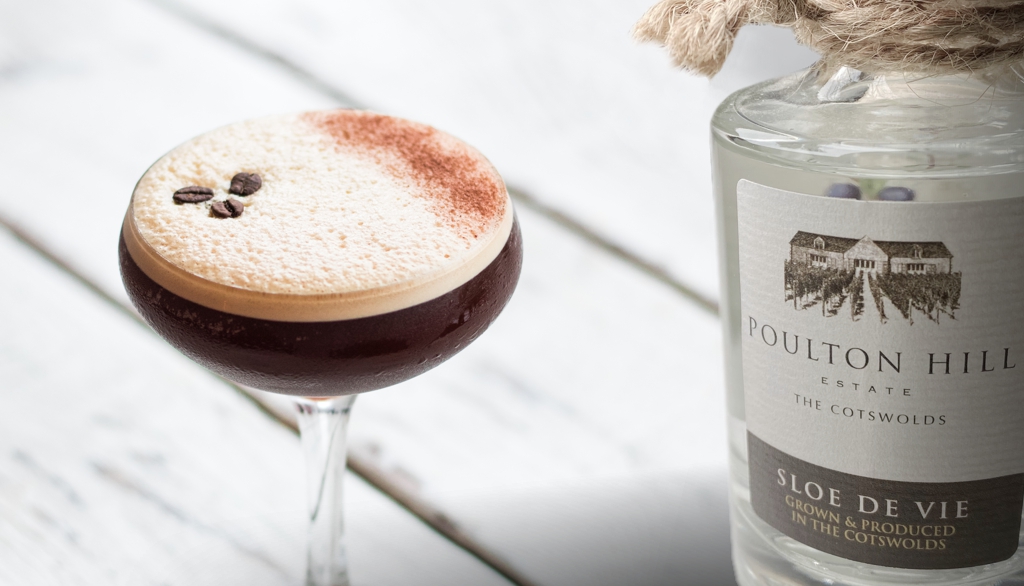
Espresso Martini with a Twist


There are many different ways to make an Espresso Martini. This one has a little added Cotswold flavour in the form of our Poulton Hill Sloe de Vie.

Ingredients

  • 100ml Poulton Hill Sloe de Vie
  • 50ml coffee liqueur (such as Kahlua or Tia Maria)
  • 50ml freshly brewed espresso
  • Coffee beans

Method

Make the espresso. You can let the coffee cool down but adding it while warm can help to create the creamy top. Then, put the liquids into an empty jam jar with a lid or into cocktail shaker and add some ice. Shake vigorously for 30 seconds and then strain into glasses. Add whole coffee beans to the top if you wish.

Review of the Year 2020

Vineyard Hobbits’ Highlights


Looking back on 2020 is not something many people will do with fondness, I imagine. We have seen many of our friends, both those in our personal life and in the hospitality industry, struggle with the impact of the Coronavirus. But, on reflection, we have much to be thankful for this year and we have had some amazing highlights, which we would love to share with you.


Our loyal customers and friends

We have had amazing support and loyalty from our customers throughout the year and, although Cellar Door visits were minimised, we have been lucky enough to continue to talk (on the phone and virtually) to many people. During the first lockdown we had several special offers and a free delivery service to help those stuck at home. We were so pleased that these were so warmly received.


Awards

Our wonderful customers also led to us being named Best Vineyard in the Cotswolds in the Cotswolds Awards 2020. The award was the result of a public vote and we cannot thank you all enough for this. We were also thrilled to be a finalist in the Food/Drinks Producer of the Year category in the SoGlos Awards 2020.

We also won the following medals for our wine this year, despite many wine competitions being cancelled or postponed.

  • Glass of Bubbly 2020: Silver, Spring Fling category, Bulari Rosé 2015
  • WineGB Awards 2020: Bronze, Arlington White 2018
  • WineGB 2020: Bronze, Arlington Red NV
  • International Wine Challenge 2020: Commended, Arlington Red NV
  • Sommelier Wine Awards 2020: Commended, Bulari Rosé 2015


New markets

In June this year, Waitrose put our Bacchus 2018 on its shelves in 29 stores across the country and in its online Cellar, increasing our visibility and attracting many more wine-lovers to our wines and spirits. Our hand-picked Bacchus grapes were also used by Laneberg Winery to make a wine for Fortnum and Mason, which went on sale in August.

And although we have not been able to attend our usual range of festive Christmas Markets this year, our sister company, Bibury Trout Farm, has been able to take our wines to farmer’s markets to sell alongside their trout products. If you want any trout and wine pairing tips, keep an eye out for our newsletters and on the website.


A good harvest

Early in the year, we had not only Coronavirus and a National lockdown to contend with, but we were heartbroken when our vineyard suffered from a late frost, which destroyed many of our low-lying vines. Despite this, we had a far higher quantity and quality harvest than we expected and our 2020 wines will be ones to watch out for.

In the vineyard, we are continuing to watch our Pinot Noir vines grow, and can’t wait to share our new wines with you.


Hobbit news

On a more personal note, the vineyard Hobbits (Natalie and I) have continued to work when possible throughout the year, along with the vineyard pooches, Minnie and Phoenix. Minnie reached the ripe, old age of 14 this October, which we celebrated with a tasty treat for her and glass of Bulari each for us. Although, we have really missed seeing many of our customers at the Cellar Door and sharing work and our wines in Tour and Tasting sessions, we have still been able to enjoy working in the vines and dropping off orders in our trusty yellow van “Oui Oui!” We are really looking forward to 2021 and the time when we can freely welcome you all back to Poulton Hill Vineyard again.


Tiléri and Natalie

Menu of the Month: December

Indulgent festive breakfast

Ingredients

2 duck eggs per person

6 tbsp of single cream per person

A large knob of butter, with extra for the toast

Wholemeal/brown bread

Smoked trout fillet

Chopped fresh chives

Truffle shavings


Method

Whisk the eggs and the single cream together, along with a pinch of salt. Heat a non-stick frying pan and add the butter. Let it melt until it covers the bottom of the pan.

Pour in the mixture and let it sit for 20 seconds before using a wooden spoon to turn and fold the mixture. Let it sit for a few seconds and fold it again. Repeat this step until the eggs are softly set.

Remove from the heat to let it finish cooking while you make the toast.

Once the toast is ready, butter it lightly, give the scrambled eggs a stir and then scoop on top of the toast.

Cut the smoked trout into thick strips and fold on top of the eggs and then sprinkle with the chopped chives and truffle shavings. Grind black pepper over to taste. Serve with a glass of Bulari White.

Menu of the Month: November

Bibury trout en papillote, served with quick herby, lemon potato salad

Serves two

Easy


Ingredients

2 x Bibury trout fillets

1 red pepper

240g potatoes

2 x lemons

4 x spring onions chopped

Choice of herbs (dill, parsley and thyme)

Olive oil

Ground black pepper

Salt

2 x Large squares of foil or baking parchment cut into two heart shapes to make little parcels for the fish


Method

Heat oven to 220C/200C fan and place a large pan of salted water on the hob to boil.


Place a trout fillet on each of the lightly oiled foil squares or on one side of the baking parchment hearts. Remove the top, core and seeds from the red pepper and finely slice. Then scatter the pepper, two of the spring onions and some of the chopped herbs over the trout fillets. Squeeze over the juice of a lemon, season and drizzle with a little olive oil. Fold the other side of the heart over and, starting from one end, fold over and crimp the edges to form a pasty-type shape. The envelope should be sealed completely. Cook for 15 to 20 minutes or until the fish is cooked through.

Wash and halve the potatoes, and boil in salted water until tender, approximately 14 minutes. Add the remaining spring onions and herbs to a bowl, with the juice of half a lemon – give this a good mix. Once the potatoes are cooked, allow them to cool a little, then add to the bowl, mix well and season to taste. Once the trout is cooked, you can either serve it in its little parcels on the plate or open them up and serve directly, a wedge of lemon, the potato salad and a glass of award-winning Bulari Rosé.

Roman roots to our Cotswold vines

Roman amphora

Bonum vinum laetificat cor hominis:

“Good wine gladdens a person’s heart” – Latin proverb

Roman amphora

Our vineyard was only established in 2010, although there is evidence that winemaking has taken place in England, on and off, since Roman times.

The area around Poulton Hill Estate is steeped in Roman history. Our vineyard is situated near the Roman town of Corinium, now Cirencester. It is located at the meeting point of three major Roman roads: the Fosse Way, Akeman Street and Ermin Street. When you come to visit us here at Poulton Hill, the chances are that you will travel along one of these ancient ways.

Corinium became the second-largest walled city in Roman Britain. It was also the capital of Britannia Prima, when the country was split into provinces.

For those who have a love of history, and Roman history in particular, there is much to visit in this area. Not far from Cirencester, near the village of Chedworth, are the remains of an impressive Roman villa, with its bath houses and beautiful mosaics.1

Cirencester itself has the wonderful Corinium Museum, with its wealth of Roman artefacts, which tells the story of the town and its Roman past.2

Visitors to Cirencester can also see the remains of the impressive amphitheatre that stood just outside the town walls. These days, its steep-sided slopes are covered in grass but, with a little imagination, it is not hard to envisage the Gladiatorial battles that once took place there, with the 8,000-strong crowd shouting and cheering their support.3

Poulton Hill is also very close to Bath, the Roman spa of Aquae Sulis, sited at the source of a large, natural hot spring. Its famous Roman Baths attract visitors from around the world.4

It is well-known that the Romans loved their wine, and the Corinium Museum has many items, from mosaics to sculptures, that contain images of the Roman God of Wine, Bacchus, after whom one of our grape varietals is named. But how they drank their wine was different to how we drink wine today.

Roman wine was stored in clay amphora, which came in various sizes. Romans drank their wine mixed with water, sometimes even sea water, and often added spices or honey to add different aromas, sweetness and flavours. Everyone drank wine, from the Emperor down to the plebeians and even the slaves, although the quality would have been different. Wine would also have made an appearance at every meal, even breakfast. Bread, if a little stale, would have been dipped in wine to soften it, and watered wine, with spices or honey, would have accompanied a breakfast of wheat pancakes, figs and honey.

The treatment of our vines and our grapes at Poulton Hill is little different to how the Ancient Romans took care of their vines; we undertake the meticulous and time-consuming processes of pruning and tucking and harvesting our grapes by hand with no help from machinery, just a team of willing volunteers working up and down the rows, chatting while they work.

We look forward to welcoming you to the vineyard.

1 https://www.nationaltrust.org.uk/chedworth-roman-villa

2 https://coriniummuseum.org/

3 https://www.english-heritage.org.uk/visit/places/cirencester-amphitheatre/history/

4 https://www.romanbaths.co.uk/

Water, water everywhere, but it won’t affect your drink!

The weather outside is frightful, but our wine is still delightful

Storm Ciara, Storm Dennis and then Storm Jorge. The past two months have seen the vineyard take a real battering from wind and torrential rains.

The village at the bottom of Poulton Hill has had floodwater across the main road and the local Ampney Brook burst its banks.

But what impact has this huge influx of water and the high winds had on the vineyard and the vines?

Well, the winds did not make winter pruning much fun. But the vines are in a dormant, woody state and, now they are pruned, there is not much to be blown about.

The excessive water could be a problem at other times of the year. Heavy rain can wash the delicate buds or flowers off the vines in the spring. In autumn, the fruit would swell with water lowering the sugar content.

In the vines’ dormant state, the rainfall will have little impact. But the roots of the vines need air in the soil and if pooling does occur it can lead to root rot. So, we do work hard to ensure that the ground does not get waterlogged. This is helped by the fact that our vines are at the top end of a sloping field. The water will naturally soak down to the lower end, where we do not have any vines planted.

In this part of the Cotswolds we have a high clay content in the soil. This has a greater capacity to hold water, so soil and the nutrients in the soil are not washed away. The vines have deep roots and increased rainfall can push the nutrients down towards the roots.

So, sit back, relax and enjoy a glass of wine, safe in the knowledge that this stormy weather will not have impacted the 2020 harvest.

Pruning stories: a saint, a donkey and seriously chilly fingers

Getting our vines in shape for a healthy harvest


It is the start of another new year and the start of our work on the vines that will produce our 2020 vintages.

The vines themselves are in a dormant state and this is when many vineyards in Europe, ours included, begin winter pruning.

The patron saint of vintners, St Vincent, has his feast day on January 22nd and there is a popular legend that links him to pruning. On one of his travels, St Vincent stopped by a vineyard to talk to the winemaker. While he chatted, his donkey nibbled at the vines. The following harvest, the vines that the donkey nibbled grew the healthiest and most abundant grapes, and thus the benefit of pruning the vines was established!

Vincent’s name can also be linked to the pruning process. In French, the name is pronounced Vin Sang. The direct translation of these words is wine blood – perhaps the sap that emerges as the vines are pruned?

Winter pruning will take place at Poulton Hill Vineyard during January, regardless of the weather. It is vital to get this process completed before bud break or bud burst, which occurs in March to April.

We prune by hand at Poulton Hill, which can mean many chilly mornings as we work up and down the vines. Some vineyards in France used to keep their workers warm with Chariots de Feu (quite literally Chariots of Fire), which were oil drums on wheels or wheelbarrows that would be moved between the vines burning the wood that had been pruned. We have to make do with warm gloves, hats and thick socks.


A winning start to 2020

Arlington Red NV is Commended in the International Wine Challenge

We have been given an early Christmas present at Poulton Hill Vineyard in the form of an international wine award.

We are absolutely delighted to announce that our first award of 2020 is a Commended from the International Wine Challenge for our Arlington Red NV.

This is the fourth award for our red wine, which has only had two releases.

Our first release, which was a trial run for Poulton Hill red wine, was awarded a Silver Medal in the 2018 South West Vineyards Association Awards and a Bronze Medal in the 2018 WineGB Awards.

The Arlington Red NV won a Silver Medal in the WineGB West Awards 2019 as well as the Commended in the International Wine Challenge 2020.

2019 was a bumper year for Poulton Hill Vineyard, as its wines and spirits won win seven awards and it was a finalist in the Food and Farming Awards and the SoGlos Awards.

If you would like to buy our multi-award winning Arlington Red NV, we offer a click and collect service on our website.