Countdown to harvest: the signs in the vines
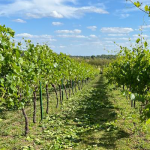
This September should be a very exciting month for us at Poulton Hill Vineyard. While some years our harvest has not taken place until mid to late October, the signs are looking good for an earlier harvest this year. What are these early signs and how do we know precisely when we need to start to pick our grapes?
- Weather
During July and August we had several heatwaves and very little rain. This can be a good sign that the harvest may be earlier as we are able to strip back the leaves to expose the grapes to the sun to help them to ripen and sweeten. This also allows air into the canopy. But we do have to be careful as we do not want the grapes to be scorched.There has been very little rain this summer, which can be problematic, but our clay soil is able to retain moisture better than chalky soils. While there have been cracks in the earth, the real sign of lack of water in the soil is when our vine leaves start to curl up (cupping) which means the vines are not able to draw up enough water from the soil.
- Changes to the grapes
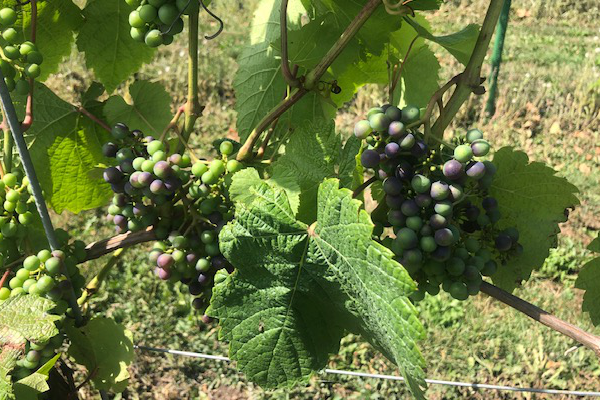
During August we start to see our grapes undergo what is known as veraison. This is easier to spot in red grapes as the fruit itself starts to turn from green to purple when the chlorophyll is replaced with anthocyanin. But veraison happens to both white and red varieties. It is the point in the lifecycle of the vine when energy is put into ripening and sweetening the grapes and the acidity level decreases.We spotted the first signs of veraison in the Rondo and Regent grapes during our vineyard check on Monday 1st August. Last year, we did not see the first signs of veraison until 10th August. From the point of veraison, it will be anywhere between 30 and 70 days until the grapes are ready to harvest and can be made into wine. The earlier the veraison, on the whole the earlier the harvest, particularly if the weather continues to be warm and sunny. After veraison, we continue with the leaf stripping to expose the grapes to encourage further ripening.
- Changes to the leaves
When the grapes are ripening, they start to take the energy out of the leaves. The leaves will begin to turn red and orange, but still have nice green veins. The vineyard might begin to see an increase in the number of birds or insects visiting, looking for a tasty treat. This is why, once we have finished with leaf stripping, we bring down the nets to stop all our sweet grapes being eaten by the local wildlife!
Step-by-step guide to checking the sugar levels in the grapes
Once we can see that the grapes are looking really ripe, we need to take a more scientific approach. This is detailed in our blog Grape Expectations, and you can read it here.