Tasting notes for a Christmas treat

A fantastic local festive pairing

December is upon us, and we are all looking forward to enjoying some festive food and drink. If you are planning a party with canapés or trying to work out which wine to pair with your Christmas food, then we are here to help.

Poulton Hill Estate now stocks a range of trout products from our sister company Bibury Trout Farm, and this week we all got together for a tasting session to discover which wines they pair best with.

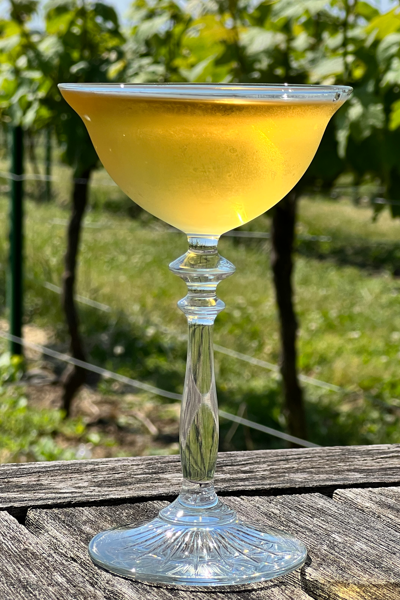
Bibury Trout Farm’s Cold Smoked Trout works really well with a glass of Poulton Hill’s Bulari sparkling white wine. The acidity and bubbles in the Bulari cut through the fat and oiliness in the fish. Bibury uses a “dry cure” technique, a slow and intricate process that takes up to 24 hours using oak and beech chips, which creates this delicately smoky flavour.

If you are thinking about a special Christmas breakfast, Cold Smoked Trout is wonderful served with poached or scrambled eggs. If you want to create a special canapé for your drinks party, then how about crostini baskets with a dollop of crème fraiche, a slither of Cold Smoked Trout and topped with fish roe? Bulari will be the perfect accompaniment to both of these dishes.

The off-dry Arlington White wine lends itself beautifully to Bibury’s Trout Paté, made using the light and dark smoked trout which are smoked for up to nine hours. The sweetness from the wine sits really well with the paté’s sharper notes of dill, horseradish and lemon. Poulton Hill’s Arlington White is also a good match for Bibury’s Light Smoked Trout and Cold Smoked Trout.

Due to the complexity of Poulton Hill’s Phoenix white wine, it needs a stronger piece of fish such as the Dark Smoked Trout. This has a rich and intense flavour, created by skinning and filleting the fish and giving them more exposure to the heat of the smoking. The Lightly Smoked Trout, which is smoked as a whole fish with its skin on for nine hours, works really well mixed with the Dark Smoked Trout in a risotto, salad or kedgeree. Simply serve these for a Boxing Day light brunch with a glass of Phoenix. The Bibury SmØrgel, which contains a mix of capers, gherkins, red onion and parsley, is another excellent pairing with the Phoenix.

If you are looking for another wine option, then the fruity notes of our Rosé make it a great match with the Dark Smoked Trout.

If you would like to chat to us about wine and trout pairings, or buy any of our wines and spirits and some Bibury Trout Farm products, then our Cellar Door is open five days a week, including Saturdays between 11am and 3pm. Weekday opening hours at the Cellar Door are from 9am to 5pm on Tuesday, Thursday and Friday; and from 9am to 4pm on Wednesday.

Vineyard Vignette: November 2023

The grapes have gone but there are good times ahead

November is here and harvest is over. The vines have been stripped of all their ripe fruit and the local birds and insects are helping to remove the rest.

We loved meeting all our harvest helpers this year and want to thank them all for their efforts. We hope they enjoy a glass of Poulton Hill 2023 vintage when the wine is released next year, knowing that they have played a key part in helping to make it.

Our work in the vineyard now will focus on preparing the ground and the vines for the dormant season. While in the Cellar Door we are looking forward to Christmas!

We have a range of gift options for sale, including wooden wine boxes that hold one or two bottles of still or sparkling wine. We also have bottle openers and, new for this year, we have some beautiful La Creuset sparkling wine bottle stoppers. Our Cotswold Brandy and Sloe de Vie come in different size bottles, from stocking fillers to a bottle to share with friends.

We also have Poulton Hill gift vouchers for sale from our website, so your friends and family can choose their own wines or spirits. They can also be used to pay towards our Tours and Tastings when they start up again in the summer.

If you want to visit us at the Cellar Door, you can browse our range for yourself. We are more than happy to discuss and make recommendations, either for Christmas gifts or for accompaniments your festival meal.

While you are at the Cellar Door, you can always take a bit of time to enjoy a glass of wine while you browse. We now sell wine by the glass, and it can be a great opportunity to meet up with friends in a beautiful vineyard setting.

Our Cellar Door is open Tuesday and Thursday, 9am – 5pm; Wednesday, 9am – 4pm; Friday, 9am to 3.45pm; and Saturday 11am – 3pm.

We have won a silver medal!

We are thrilled to announce that Poulton Hill Bulari has won a silver medal in the prestigious international Glass of Bubbly Awards 2023.
The medal was awarded to our wine in the Gastronomic category, for wines that have complexity and can accompany fine cuisine. It was competing with wines from across Europe, the US and Australasia. The awards were judged by Masters of Wine and professional experts on sparkling wine and champagne from all over the world.

The Glass of Bubbly judges gave our Bulari the following tasting note: “Creamy tropical notes in aroma. Flavours of mango, grass, blackcurrant leaf with herbal notes.”

Vineyard Vignette: October 2023

Playing the waiting game

October in the vineyard is different every year, depending on when we start to harvest. Sometimes this happens in early September and one year we waited until the very end of October for the grapes to reach the right balance of sweetness and acidity. This is normal for vineyards in the northern hemisphere, although some more southerly European nations may harvest from August onwards. Saying this, the heatwave in Germany in 2018 meant that German vineyards started their harvest in early August, in line with many Italian vineyards and weeks earlier than their normal harvest time.

In England this year, despite the hottest June for many years, we had a very wet July and August with the sun not really appearing with any strength again until early September. This means that we are anticipating that we will start to harvest at some point in mid-October. There really is no point harvesting before we get the right readings as it will impact the flavour and quality of the wine, as well as the fermentation itself. Yeast is added to the grape juice, and the yeast converts the sugar in the grapes into alcohol and releases carbon dioxide.

Once the harvest is finished, our work in the vineyard will continue. Any grapes that were not ready to harvest remain on the vines and are left for the birds. Then we focus on getting the right nutrition into the soil to make sure that the vines are ready for their dormant phase. The vines need to have enough nutrients to ensure they can survive the winter and begin to produce new growth in the spring. This means that we still continue to feed the soil after harvest.

In preparation, we rotavate the ground between the rows of vines. Then, in spring, we lay down fresh mixed seed for plants that will put back some goodness into the soil, for example radish plants. This will also help with drainage. We check the ground and the soil every couple of years to make sure it is at its best, which means maintaining a PH balance of between 6 and 6.5.

Wine by the glass

What better place to enjoy a glass of English wine than in the vineyard where the grapes are grown? We now sell wine by the glass at the Cellar Door, so you can stop off with friends for a drink and a chat. We are set up for any weather, with indoor and outdoor seating, and our Cellar Door staff are on hand to offer advice and information. You can also take advantage of our special Cellar Door prices on bottles of wine or spirits to take away.

Our Cellar Door is open Tuesday to Friday from 9.30am to 3.30pm.

Vineyard Vignette: September

Countdown to harvest

September at the vineyard is a bit like the run up to Christmas for children. We eagerly await the moment when the grapes will be ripe enough to start the harvest. Harvest can be anywhere from a few weeks into September, right up until the end of October, depending on the climactic conditions in the growing season.

Unlike last year, where we experienced several heatwaves during July and August and had very little rainfall, in 2023 we had a very warm June, and quite a bit of rain and overcast weather with high humidity in July and early August. This led to mildew forming on the grapes and we had to remove bunches that were damaged and covered in Powdery Mildew. We also had to increase the number of times we spray the vines. We have now eradicated Powdery Mildew entirely from the grapes in the vineyard, which means we now have to hope for a little more sun to help the grapes to ripen.

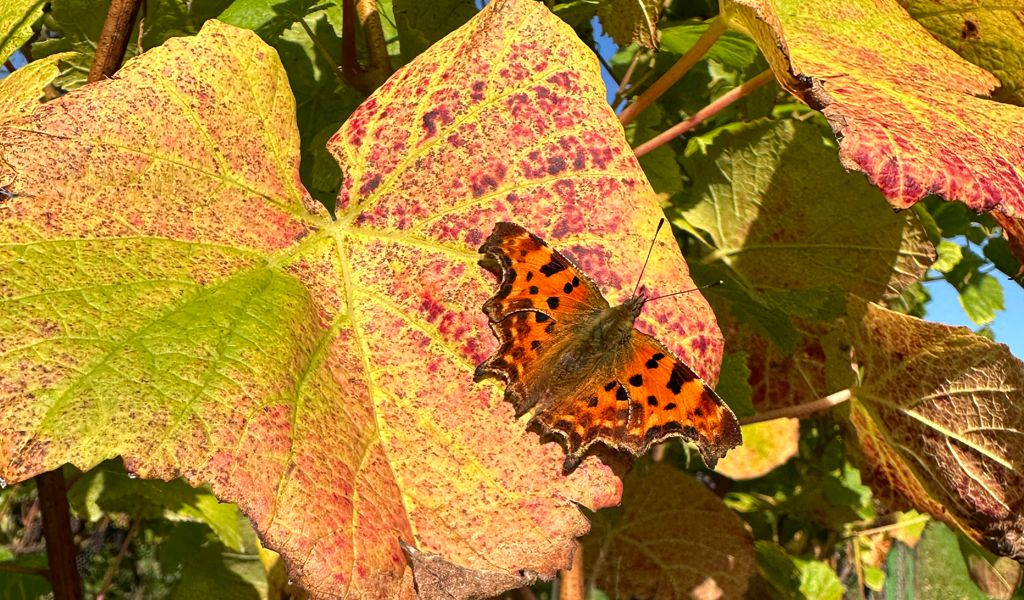
The grapes are now going through veraison, which is easier to spot in red grapes as the fruit itself starts to turn from green to purple when the chlorophyll is replaced with anthocyanin. But it is not just the grapes that change. We can also see how close to harvest we are by changes in the leaves. As the grapes ripen, energy is taken from the leaves, which begin to turn red and orange (but maintain their green veins).

When both the grapes and the leaves look like they are close to being ready, we start to check the sugar levels in each of the grape varieties. Some varieties will ripen earlier than others, so we need to ensure that we check them all. We collect 25 random samples from each variety and use a refractometer that is set to the Oechsle scale, which measures the density of the grape must. This will indicate a grape’s ripeness and sugar content. When we measure the must, we need to ensure that no light gets in as this can affect the reading. Once the sugar and acidity levels reach the right point, it is time to harvest.

The one final thing that can directly affect harvest, even when the grapes appear to be ready, is the daily weather. If it is raining, the grapes will swell up with water and both the sweetness and the acidity levels will be affected. This is when we keep a close eye on the weather forecast and the skies above our heads.


Would you like to join us for harvest?

We are always keen to have helpers at our harvest. It is a great way to get to know our customers and our local community. Harvest days start at around 9am, with a cup of tea or coffee, a biscuit and maybe a small glass of last year’s wine to toast the start of what we hope is another bumper year. Harvest lunch, with wine, is provided, as are snacks and tea and coffee throughout the day.

We give all the training that is needed and provide clippers. We recommend wearing a pair of gloves as the clippers are sharp and the grape juice is sticky. You do not have to spend the entire harvest with us, but you can pop in for a morning or afternoon or for a few hours when you have time.

If you are interested in helping out with harvest, please drop us a line at info@poultonhillestate.co.uk. We can’t give you a date when harvest will start yet, but it is looking like mid-October. We will inform everyone nearer the time.


Wine by the glass

We now sell wine by the glass at the Cellar Door in Poulton. Please pop in to see us to have a glass of wine and chat. If you find a wine that you particularly like you can then buy a bottle or two, or even a case, at our special Cellar Door prices.

Our Cellar Door is open Tuesday to Friday from 9.30am to 3pm.

Vineyard Vignette: August

Wishing for warm and fruitful August days

August is here and we are looking forward to long, warm days that will encourage our grapes to grow and ripen.

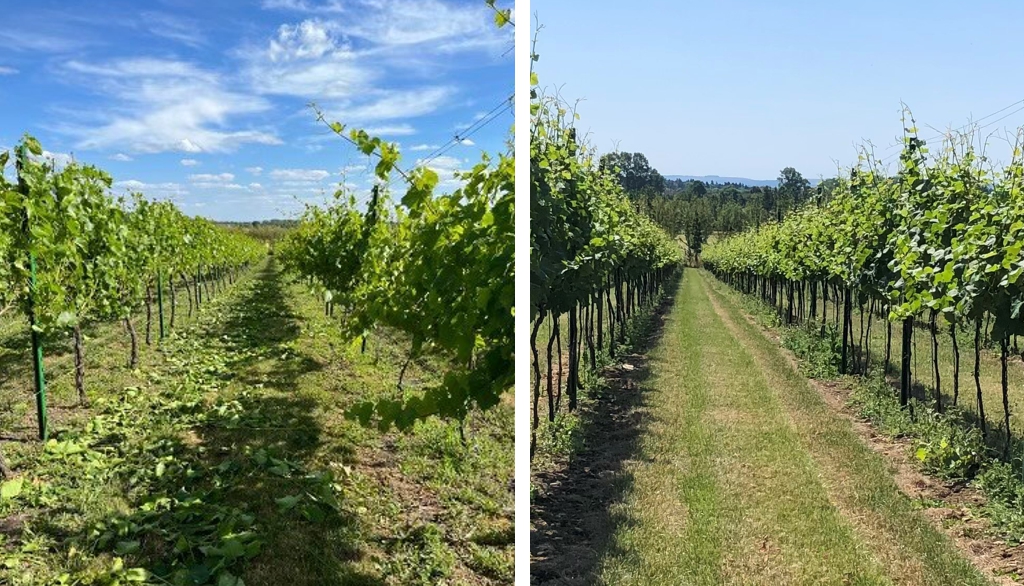
The start of July was cooler than June, and we had some very welcome rainfall. As a result, our vines have had a bit of a growth spurt. We have been taking up the wires that the vines grow along and tucking the vines in. We are stripping excess leaves from the vines too. We want to focus growth into the grapes and not the shoots and we need to allow for airflow in the canopy. You may have seen vineyards in warmer, dryer and hotter climates with an abundance of foliage to protect their grapes from the sun. But without air flowing through the canopy, our damp and sometimes humid climate means that we are at risk of diseases such as mildew, which could impact an entire year’s crop. The sun needs to reach the grapes to help them to ripen, but we can’t strip all the leaves as they need a little protection too. It is a delicate balancing act!

Later on in the month we should see the start of veraison, where the vines put energy into ripening and sweetening the grapes, which start to change colour. This happens with both the red and the white grapes but is more obvious in the red as they turn from green to purple.

Once veraison starts we also put nets up over the vines to stop the birds from stealing our delicious ripening grapes. We have found bird nests in the vines before, but these are usually empty by the time we bring down the nets. We also check for any insect life that may be damaging the vines. From the start of veraison, it can be anywhere between 30 to 70 days until the grapes are ready to harvest.


Harvest helpers wanted

Harvest at Poulton Hill can occur anytime from mid-September until late October, depending on the weather and climate in any given year. We love harvest time and are looking for volunteers to share the experience with us.

Harvest days start at around 9am, with a cup of tea or coffee, a biscuit and maybe a small glass of last year’s wine to toast the start of what we hope is another bumper year. Harvest lunch, with wine, is provided for all our workers and volunteers, as are snacks and tea and coffee throughout the day.

We give all the training that is needed and provide clippers. We recommend wearing a pair of gloves as the clippers are sharp and the grape juice is sticky. You do not have to spend the entire harvest with us, but you can pop in for a morning, or afternoon or for a few hours when you have time.

If you are interested in helping out with harvest, please drop us a line at info@poultonhillestate.co.uk. We can’t give you a date when harvest will start yet, but you will be informed nearer the time.

Vineyard Vignette: July

Summer work has started but so has summer fun

We have had quite a slow start to our growing season this year, with colder than normal weather meaning our bud burst was late and we only started to see the first blooms appear on the vines in early June.

However, we have had some warmer weather and some sunshine since then, and our vines now are growing well. We will be starting the first steps in cane selection soon, which will entail removing shoots that grow in the wrong direction from the crown (the bulbous top of the vine). We do not want canes getting caught in the tractor as it moves up and down the rows. Our final cane selection will not happen just yet, as we need spare canes in case of disease or damage.

It is always important to look ahead, not just in case of disease, but also to ensure that the vines are in optimal condition in future years. The canopy should be maintained at 1.2 metres high, so we look at the crown and start to select canes that will ensure that the canopy does not get too tall.

Although at the start of July we have sometimes started to bring up the tucking in wires, our slow growth this year means that it will probably be a few weeks before we need to do this. The vines are trained to grow along these wires, ensuring that they do not grow too tall and can benefit from maximum sun and air exposure. This is aided by canopy management. When the leaves start to grow in abundance, we prune some to allow air to flow through the canopy, but we need to also protect the fruit too. It is a careful balance.

We are running Vineyard Tours and Tastings throughout the summer. If you want to see the work we do in the vineyard, check out the dates of tours here and give us a call on 01285 850257 to secure your place.


Strawberries, sparkling wine and lawn tennis

July is also synonymous with the Wimbledon Tennis Championships, and nothing is more English than enjoying watching a match with strawberries and cream, and a glass of sparkling wine. If you are spectating at home, you can still enjoy your strawberries and cream, but why not serve them up with a glass of Bulari Sparkling White Wine? Made with a blend of Seyval Blanc and Pinot Noir grapes grown at the vineyard, our Bulari has mouth-watering juicy apple at the forefront, hints of grapefruit and lemon (sherbet) and a wonderfully well-rounded mouthfeel with a crisp, clean finish. As with all our wines, it is suitable for vegans and vegetarians.


From chalk…

Schools are breaking up for the summer later this month and it is time to say a big thank you to all the teachers who have helped to guide and educate the children this year. If you are struggling to think of a gift, why not get them a Poulton Hill Gift Voucher that can be exchanged for any of our wines and spirits or one of our Tours and Tastings sessions? Check out our website for more details or pop in to see us at the Cellar Door to discuss your needs.

To cheese…

July 25th is new celebration for us: it is National Wine and Cheese Day! We love trying English cheeses with our wines. If you would like to learn what we found to pair with Poulton Hill wines, take a look at our blog on an English Cheese and Wine Tasting here.

Brandy cocktails that are just my cup of tea!

Shaken, stirred and all set for summer

Here at Poulton Hill we are passionate about local produce and we take our Think Local, Drink Local ethos very seriously. We are, therefore, thrilled to announce our new partnership with award-winning local liqueur company Liqueurious.

Liqueurious has developed a range of alcoholic tea and coffee liqueurs that have won Gold and Silver awards in the World Liqueur Awards 2023, as well a Gold Taste of the West award and a Great Taste award.

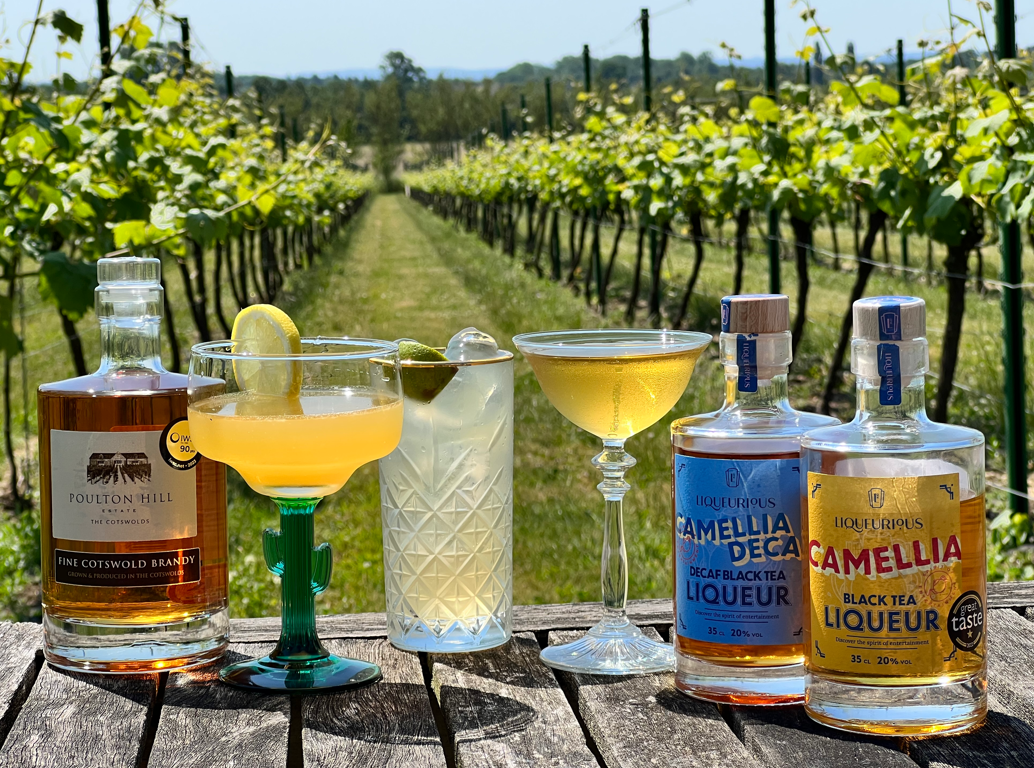
Its founder, Jason, came to visit us at the vineyard and created four cocktails using Poulton Hill’s Cotswold Brandy and Liqueurious’ tea liqueurs. Whatever your cocktail preference, there should be something for you.


First up is a Margarita on the Hill (Poulton Hill of course!).

Jason says that a Margarita without tequila may sound a little confusing, “but swapping tequila for brandy is not as strange as it sounds”.

He explains: “Tequila Reposado and Anejo are usually aged in used American whiskey or bourbon barrels, and occasionally in Cognac/brandy barrels too. The tequila ageing process adds nuances of oak, vanilla and caramel, which is similar to the flavour profile of Poulton Hill Brandy.”

By using brandy, you add an “element of sophistication and refinement that magnificently partners with tea liqueur. The result is unmistakeably Margarita-esque!” he adds.


Recipe

  • 50ml Poulton Hill Cotswold Brandy
  • 30ml Camellia Tea Liqueur (both Camellia and Camellia Decaf work well)
  • 20ml freshly squeezed orange juice
  • 10ml freshly squeezed lemon juice
  • 10ml simple syrup*
  • Garnish with a lemon wheel

Glass – Coup or Margarita glass

Method

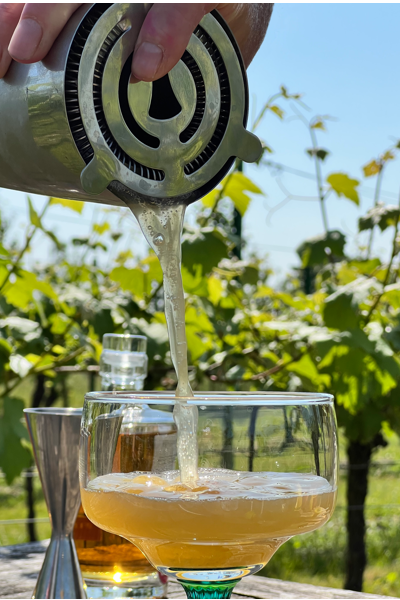
Put all ingredients into cocktail shaker, add ice and shake until cold. Strain into a coup or Margarita glass and garnish with the lemon wheel.

A Margarita on the Hill pairs very well with Mexican foods, Cajun foods, salsas and curry.


Our next cocktail is a Metro-Poulton, which is a twist on a Metropolitan, and is refreshingly simple and bold. The Metro-Poulton is like a Martini, although is it stirred and not shaken as you do not want ice shards spoiling the cocktail.

Jason says: “The citrus and caramel tea notes form a long-lasting friendship that encourages and extracts a confidence from the brandy.”

If you like a little sweetness in your cocktail, add a little simple syrup, but it tastes great with or without it.

Recipe

  • 50ml Poulton Hill Cotswold Brandy
  • 30ml Camellia Tea Liqueur (both Camellia and Camellia Decaf work well)
  • 5ml simple syrup*

Glass – Coup or Martini glass


Method
Pour the ingredients into a mixing jug and add a handful of ice. Gently stir for 30-45 seconds and strain into a chilled coup or martini glass.

Try pairing a Metro-Poulton with steak, cheese and cured meats, or chocolate brownies and ice cream.


The third of our cocktails is an Estate Fizz, which is fresh and tangy and perfect for sipping on warm summer days. The Estate Fizz is simple to make and, like the Metro-Poulton, is not shaken.

Jason describes it as a “bittersweet love affair” from the tart spicy qualities of grapefruit to the forgiving sweetness of the tea liqueur. “The brandy undertones are uplifted by the effervescence of the soda, making for a cool, sparkly and refreshing summer sipper.”

Recipe

  • 50ml Poulton Hill Cotswold Brandy
  • 30ml Camellia Tea Liqueur (both Camellia and Camellia Decaf work well)
  • 10ml lime juice
  • Pink grapefruit soda top
  • Lime wedge to garnish

Glass – Highball glass


Method
Rub the lime wedge around the rim of a highball glass. Add the brandy and tea liqueur into the glass and fill with ice. Top with grapefruit soda, gently stir, and garnish with the lime wedge.

Try pairing an Estate Fizz with Mexican foods, Cajun foods, salsas and fresh salads.

Our final Liqueurious cocktail, Fatherhood, is in honour of all the fathers out there and takes you on a journey around the world.

Jason explains: “Setting off from the Caribbean (rum), you cross the North Pacific Ocean to China (tea), then across Eurasia to Germany (Schnapps) and then over the English Channel to England and back to the Cotswolds (brandy).

“It is this worldwide effort, binding tropical fruits, spice, citrus, tannins and peach that makes for an exquisitely complex yet moreish treat.”

Recipe

  • 45ml Camellia Decaf (both Camellia Tea Liqueur and Camellia decaf work well)
  • 40ml Barbados dark rum
  • 10ml Poulton Hill Cotswold Brandy
  • 10ml peach Schnapps
  • 10ml freshly squeezed lemon juice
  • 5ml simple syrup*

Glass – Brandy glass

Method

Combine all ingredients into a shaker and add a handful of ice. Shake until cooled and strain into a glass and top with ice.

Try pairing a Fatherhood with steak, cheese and cured meats, or chocolate brownies and ice cream.

*To make the simple syrup, combine 1 part sugar to 1 part water and heat in a saucepan until the sugar has dissolved. Allow to cool.


  • If you want to learn more about Liqueurious and its range of award-winning tea and coffee liqueurs, visit the website and online store here.
  • For more details on Poulton Hill Vineyard’s Cotswold Brandy, click here.


A perfect pairing

Totally cheesy tasting with a very English flavour

We are often asked about pairing our Poulton Hill Vineyard wines with food. Although we are great advocates of drinking the wine you like with any type of food (or on its own) we thought we would challenge ourselves to find some good matches. This was, I must say, great fun, very delicious and we ended up with some surprisingly fantastic pairings.

Our “Think Local, Drink Local” motto meant that we wanted to focus heavily on pairing our English wines with English produce. To kick things off, we started with all things cheese. We lined up Poulton Hill’s Rosé, Bacchus, Arlington White, Special Reserve and Phoenix wines and paired them with a variety of English cheeses.

We started with our award-winning Bacchus white wine. It has grapefruit at the forefront and hints of lychee on the palate. The Devon Blue cheese paired deliciously with the citrus and tropical notes of the Bacchus, which brought out hints of caramel and occasional spicy notes in the cheese. We also found that the Bacchus was a great match with the well-known, semi-hard Cornish Yarg. The wine’s zippy acidity was able to cut through the fatty nature of this crumbly cheese.

Our Arlington White wine is medium dry and brings out the richer and creamier flavours of cheese. This made it a great match for the Dorstone Goats Cheese, which is light and fluffy in texture with bright, citrusy flavours and gentle acidity. Dorstone was also a great match for our Rosé.

Poulton Hill’s Special Reserve is reminiscent of a classic French Sauvignon. Its lychee, nettle and gooseberry notes were able cut through the flavour of St Jude – a cow milk cheese with a dense lactic core – without being overwhelmed.

Our Phoenix white wine is crisp and wonderfully balanced, bursting with gooseberry, pear and creamy apple. It paired really well with Royal Basset Blue, which is made not far from the vineyard, in Wiltshire. This soft cheese is packed with flavour but not overpowering, it was simply heaven.

The Rose and Crown in Clapham also held a wine and food tasting, using solely Poulton Hill Vineyard Wines. To see which English food they paired with our wines, take a look at the menu in the picture.

If you would like to talk to us about our wine, why not pop in to see us at the Cellar Door or email info@poultonhillestate.co.uk.

Vineyard Vignette: June

Tours and Tastings are back for the summer

Now summer is finally here, our very popular Tours and Tastings are back. We really enjoy welcoming people to the vineyard to see our vines and the work that goes into producing our wines.Each of the sessions involves a guided tour of the vineyard, where we explain our methods for supporting, growing and pruning our vines, as well as a little about each grape variety and the wines produced from those grapes. Then we head back to the Cellar Door to taste our current vintages.

Tours start at 11am and last about 1 ½ hours. Tickets cost £25 per person, which includes a £10 voucher to spend at the Cellar Door. There are a maximum of 20 tickets available for each tasting.

Last year, some of the dates sold out very quickly. If you are interested in coming along, please check availability and book your place as soon as possible.

Please click here for more information or call 01285 850257.


Raise a glass to English Wine Week

English Wine Week runs from June 18th this year, and vineyards and wineries across the country will be celebrating by sharing their work and wines with the public.

Our ethos has always been Think Local, Drink Local, and we would love for our neighbours in Poulton to come to visit us during English Wine Week. We have two tours this week, on Tuesday, June 20th and Thursday, June 22nd, but our Cellar Door is also open to the public from 9.30am until 3.30pm from Tuesday to Friday. Why not pop along for a chat and try one of our wines?

English wines can be made from grapes that many people will be familiar with, such as Pinot Noir, but we also grow grapes that are not so common in wines from France, Italy or the New World. One of these grape varieties is Phoenix.

Phoenix is a hybrid grape, developed in Germany in the 1960s, which is a crossing of Bacchus with the hybrid grape Villard Blanc. Phoenix grows incredibly well in a cool climate and is disease resistant. This means that fewer agrochemical treatments are needed for the vines, making it a more environmentally friendly option as well.

At Poulton Hill, our Phoenix wine is a blend of 85% Phoenix, with 15% Seyval Blanc. The Phoenix grapes are relatively big, making a lighter-flavoured wine with high acidity and lower alcohol levels. Our Phoenix is just 10.5% ABV.

Poulton Hill Vineyard’s Phoenix has herbaceous hints and notes of lychee, elderberry and gooseberry, and it is a wonderful aperitive and a great accompaniment to fish, white meat and cheese.

If you would like to celebrate English Wine Week with a bottle of Phoenix, or any of our wines, visit our website www.poultonhillestate.co.uk or pop in to see us at the Cellar Door.

Vineyard Vignette: May

Spring is in the air

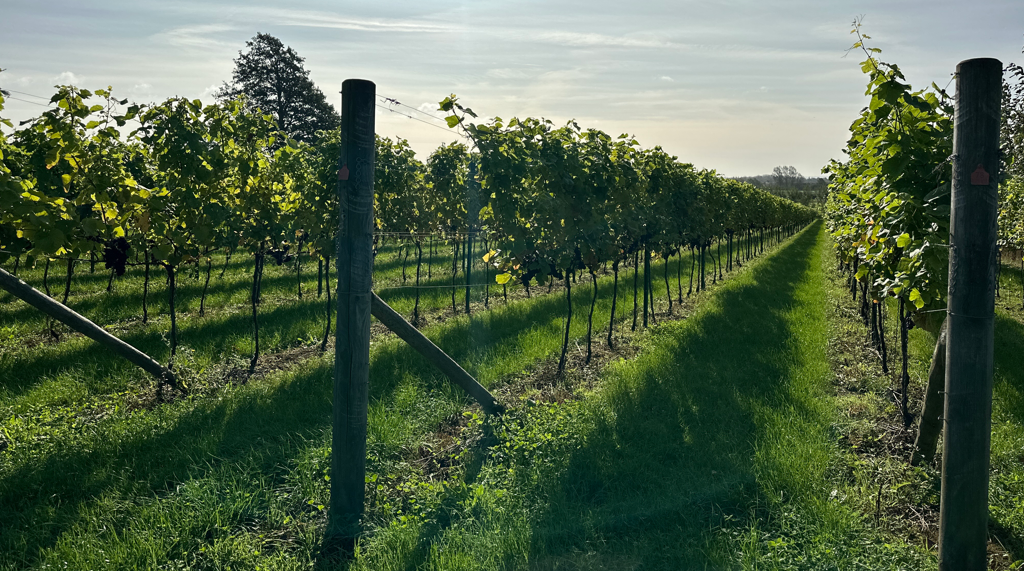
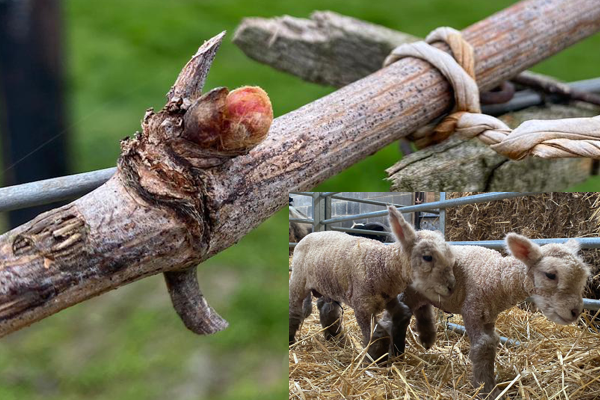
May is a lovely month in the vineyard as the vines are flourishing, the lambs are growing and the views across the Cotswolds from the Cellar Door are (hopefully) dappled in sunlight.

We are also working hard underneath the vines by undertaking subsoiling work. This breaks up the compact soil beneath the ground surface, improving the soil structure. We cut and loosen the soil where the tractor wheels have compacted it – from spraying, the mower going up and down throughout the season and our feet! If the soil becomes really compact, as the vine roots grow, they can hit the firm/compact soil and start to anchor upwards as they find it difficult to penetrate through. Subsoiling aids root growth and also helps to eliminate standing water, allowing it to drain away more easily.

We have placed bougies (large paraffin candles) in the rows of vines. These can be lit at night to warm the air if it looks like we are going to have an overnight frost, helping to protect our new growth and ensure that our 2023 crop will not be impacted by the weather.


Silver Medal for our Cotswold Brandy

We were thrilled to discover that our Cotswold Brandy was awarded a silver medal by the IWSC last month.

Judges at the prestigious international awards said that Poulton Hill’s Cotswold Brandy had a: “gorgeous nose of cedarwood and citrus zest. The liquid really develops in the glass, opening up to reveal gingerbread, vanilla and orchard fruit, carried by a soft, pillowy texture.”

If you want to try some of our award-winning Cotswold Brandy, it is available in three sizes: 10cl, 35cl and 50cl. You can buy it online or come to see us at the Cellar Door in Poulton. The Cellar Door is open from 09.30 until 15.30, Tuesday to Friday.