Vineyard Vignette: April

Looking forward to sunnier days
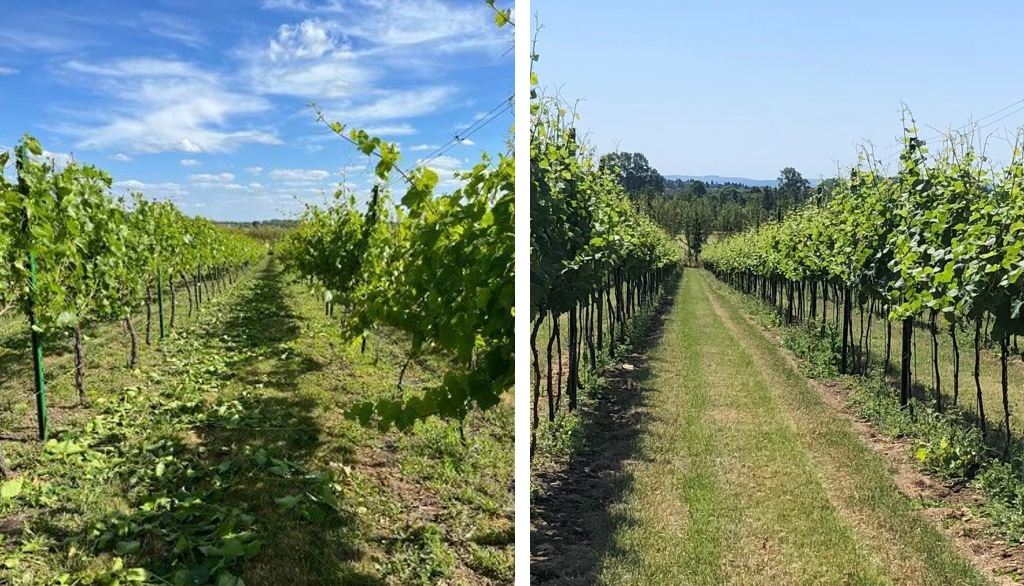
April is when we really start to see the vineyard springing back into life. New shoots are breaking out and the woody vines are showing a little colour again. New life and rebirth have long been celebrated in April. Easter falls in this month and the festival was originally named for the Pagan goddess of spring Eostre and celebrated during the Spring Equinox, when the land started to wake up again. Now it is a time when Christians celebrate the end of Lent and the rebirth of Jesus.

Although we are very familiar with the term April showers, it is not the wettest month of the year. We often see some very warm temperatures at the end of April, but we have also had snow in previous years! The unpredictability of the weather means that we are always keeping an eye out for late frosts that could damage the vines.

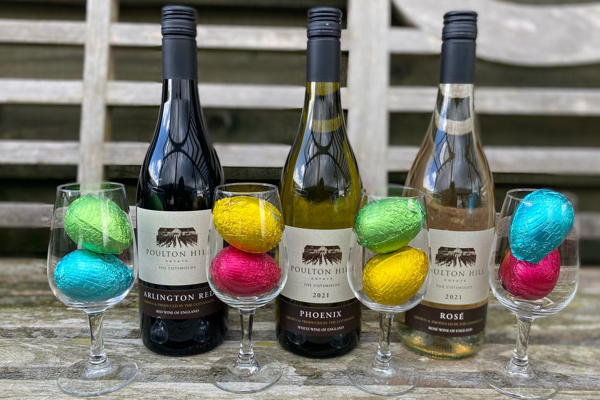
We have our fingers crossed for a few sunny days during Easter this year to enjoy the time with family and friends. Fish is often the traditional choice of food for Good Friday. Poulton Hill Vineyard’s Phoenix is the perfect accompaniment to your fish dish. The wine is vegetarian, and it has a delicious nose of fresh elderflower and subtle herbaceous undertones. The palate is crisp and wonderfully balanced, bursting with gooseberry, pear and creamy apple. It is a blend of our Phoenix and Seyval Blanc grapes.

For the Easter Sunday lunch, many people opt for a lamb dish. Our Arlington Red is a great choice. The wine is deep ruby in appearance, with a beautiful nose of cherry, blackberry and hints of strawberry. The palate is bursting with English red berries, with further dark cherry and damson at the forefront, and hints of raspberry. It is medium bodied and is able to cut through the strong flavour of the roast lamb, without overwhelming or subduing it.

If you are planning to go out for an Easter meal at a local pub or restaurant, The Falcon Inn in Poulton,  Thyme, at Southrop Manor Estate, and Tierra & Mar in Cirencester all serve Poulton Hill Vineyard wines.

If you wish to give any of Poulton Hill’s award-winning wines and spirits as gifts this Easter, you can order online and we will courier them to their destination. Or you can send a gift card that can be used against any of our wines and spirits, or our Tours and Tastings sessions.

Vineyard Vignette: March

Getting ready for growing season

While we continued with winter pruning throughout a very chilly February, we are now looking forward to warmer days and for the vineyard to show the first signs of life again. Early in spring, our vines will begin to develop small buds that will develop into shoots. Once the first buds start to appear, we need to keep a close eye on the weather for signs of late frosts. Freezing temperatures will damage the fragile buds and could severely impact our crops for the year. We have saved the offcuts from winter pruning, and these can be burnt in strategically placed incinerators in between the rows of vines to warm the air if a late frost is predicted.

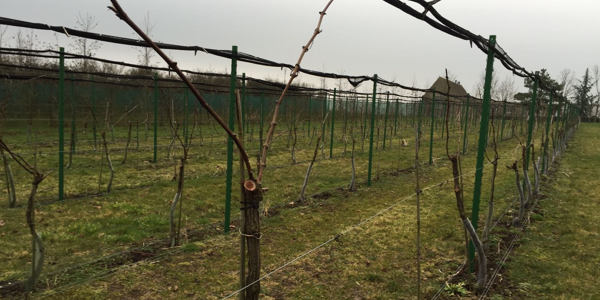
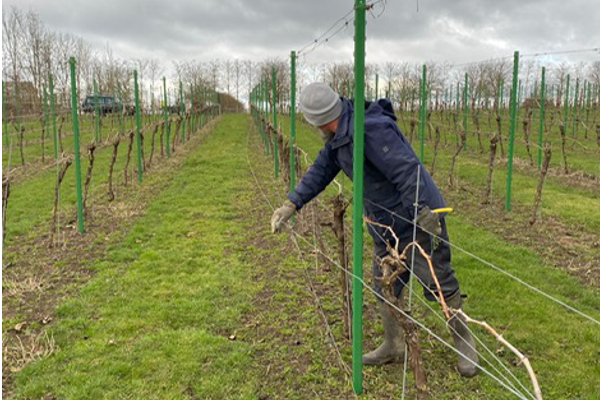
The sheep have been removed to a new pasture and the vineyard team is now working along each row of vines to lower the wires. Once the vines begin to throw out new shoots, these will grow along the wires. As the vine grows, the upper wires will be brought up again. We do not allow the vines to grow too high, but train them along the wires. We need to maximise air and sunlight, and encourage the vines to focus on growing fruit.


First taste of the 2022 vintage

The 2022 harvest has been with our winery for about six months now, and we visited the winemakers to do an initial tasting last week. The grapes we harvested in 2022 were the Seyval Blanc, Phoenix, Rondo, Regent and Pinot Noir. We took small samples of each and checked the acidity, sweetness, mouth feel, clarity, dry scale, smell, fruitiness, herbaceous notes and colour. Once we are happy with the levels of each, we will blend and taste again.

Our sparkling wines take longer to develop and produce than our still wines, as they go through a secondary fermentation in the bottle that dissolves the trapped carbon dioxide to ensure we get the bubbles. This means that we do not release a sparkling wine every year.

We have decided to concentrate our efforts on a smaller range from the 2022 harvest to ensure that we give you the very best wines we can, so watch this space for news about when they are released.

Vineyard Vignette: February

Sheep, sparkling wine and strawberries

February is another busy month for the vineyard as we continue to get on with winter pruning. The weather has not been our friend: the constant rain in January has made work a lot slower.

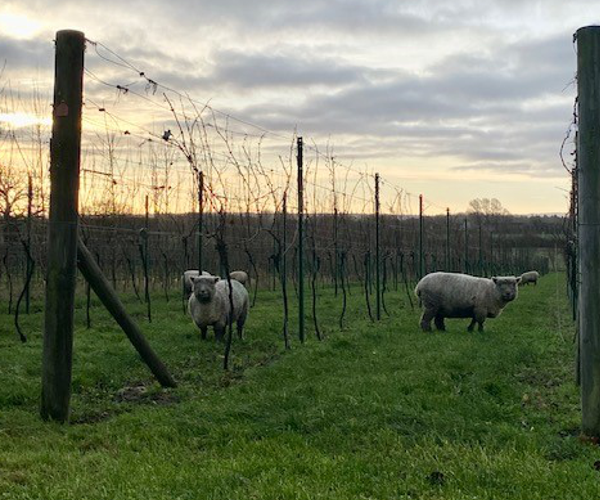
We have also had to keep an eye on drainage as we do not want excess water to cause soil erosion. One way we can help is by letting our Black Jacob and Babydoll sheep roam around the vineyard in the winter months, while the vines are dormant. The sheep not only help to fertilise the soil, but their hooves help to keep the vineyard floor well drained.

The sheep are part of our biodynamic approach. They keep weeds and grass down, reducing the need for pesticides, and they also nibble on the roses that we plant at the end of each row of vines, saving on pruning. Roses are traditionally planted in vineyards as an early warning system as they attract insects such as aphids before the vines, and they also develop fungal diseases such as black rot and mildew before they reach the vines.

Once the vines start to show the first signs of life in spring, the sheep move to pastureland to protect our precious buds and leaves.


Our sparkling recipe for lovers

Valentine’s Day is traditionally associated with champagne and chocolates, but why not shake it up a little this year with a sparkling wine cocktail? It does not have to be difficult or time-consuming as one of our favourites is a Valentine’s Strawberry Sparkling Wine cocktail, made with our Bulari Brut sparkling white wine.

Simply puree some strawberries and add a squeeze of lime, then add a spoonful or two to a tall champagne flute. Pour over some chilled Bulari and serve. You can buy our Bulari online or pop along to our Cellar Door to see us.

If you are looking for something to serve with it, Bibury Trout Farm has a brilliant recipe for Beetroot and Gin Gravadlax on its website. You can always substitute the gin for Poulton Hill’s Sloe de Vie as well. You can find the recipe at the bottom of the “How to buy” section at www.biburytroutfarm.co.uk

If you would like to learn more about Poulton Hill Vineyard, why not come to see us at the Cellar Door? We are open Tuesday to Friday from 9.30am to 3.30pm.

Vineyard Vignette: January

Time to tackle the donkey work

Happy New Year to you all from all of us at Poulton Hill Vineyard!

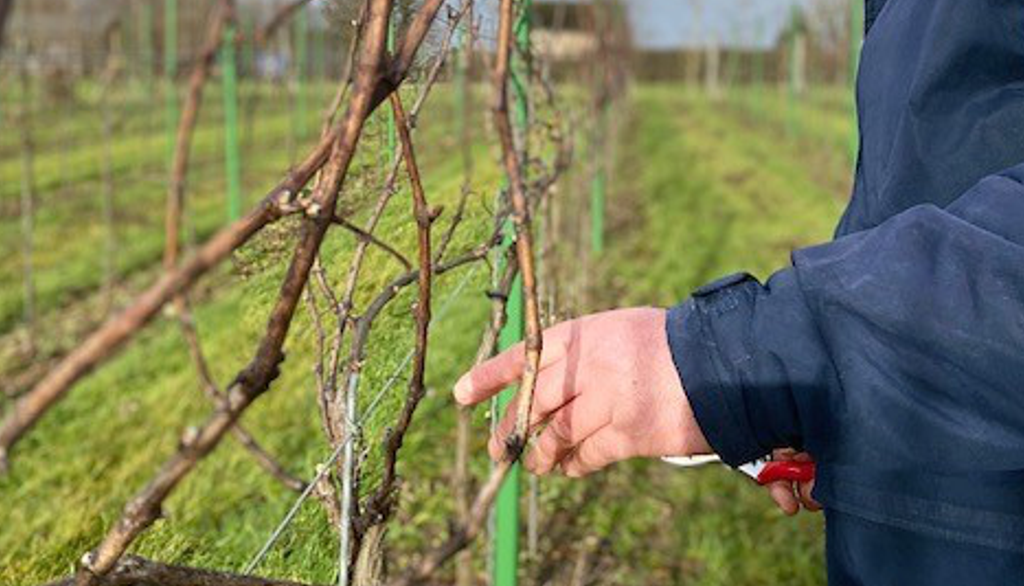
Now that Christmas is over, the hard work really starts in the vineyard. Our vines are currently dormant, much like hibernating animals who sleep through the winter until warmer weather comes. Any growth now would be affected by low temperatures and frost, which would impact the yield later in the year. While the vines are dormant, we start our preparation for the growing season with winter pruning. This is a big task, which we complete by hand.

We select two strong canes and one spur for the year (which is about the thickness of a pencil). We remove the rest of the unwanted canes with secateurs, ensuring these are sharp for clean cut. It is essential not to damage the vine as we do not want to reduce opportunities to produce canes in future years.

Then we trim the selected canes down so that between eight and ten buds remain on each. We tie down each of the remaining canes to the fixed fruiting wire. The tie should not be too tight or the cane will be strangled. We use eco-friendly, natural cane ties.

With the two canes (now arms of the vine) tied down, we treat any large wounds with garlic paste. This acts as a barrier and prevents disease from entering the vine.

Then we collect the cuttings from the middle of the rows of vines and take them to the top end of the vineyard.

Winter pruning will take place at Poulton Hill Vineyard during January and sometimes through February too, regardless of the weather. It is vital to get this process completed before bud break or bud burst, which occurs in March to April.

Some vineyards in France used to keep their workers warm with Chariots de Feu (quite literally Chariots of Fire), which were oil drums on wheels or wheelbarrows that would be moved between the vines burning the wood that had been pruned. We don’t burn our off cuts, the vine branches are bunched together and sold as kindling or wood for smokers, barbecues and fires. We have to make do with warm gloves, hats and thick socks.


The original donkey work

Preparing the canes for the growing season is a very important part of the life of the vineyard, but there are many stories about how the process of winter pruning became established. To learn more, read our blog here.

If you would like to learn more about Poulton Hill Vineyard, why not come to see us at the Cellar Door? We are open Tuesday to Friday from 9.30am to 3.30pm.

Vineyard Vignette: December

Wishing you a Merry Christmas from Poulton Hill Vineyard

Another year is drawing to a close and we would like to start by wishing you all a Merry Christmas and a peaceful and happy New Year.

December is a busy time for vineyard sales, but we are also getting the vineyard ready for winter pruning, which we usually start in January. We must make sure that the vineyard is clear of foliage from leaf drop. If any of the vines have been affected by diseases that affect the leaves, such as downy or powdery mildew, the pathogens can survive the winter on the fallen leaves and affect the vines next year. We are continuing to maintain and replace old supports and wires. We have done a preliminary prune, getting rid of leaves that remain on the vines.

Our vines are now dormant above ground, but the roots are still working hard, burrowing down to take on and retain nutrients. The trunks themselves are storing carbohydrates ready for the new growing season in the spring.


Festive food and wine

In the Cellar Door, we are working hard fulfilling orders from our stockists and from customers. We have also been giving some thought to which wines to pair with festive food.

Our Sloe de Vie is a fantastically refreshing aperitif before the Christmas lunch. Our Bulari sparkling white wine is a great match with a smoked salmon or trout starter (check out our sister company Bibury Trout Farm  for your festive fish), and it will even pair well with your Christmas turkey or goose.

For something a little different, why not try our Arlington Red wine with your festive lunch? It is medium bodied with soft tannins, so will not overpower the turkey, and its berry notes should pair well with cranberry sauce.

Obviously, our Cotswold Brandy is wonderful with mince pies and Christmas pudding, as well making a perfect addition to mulled wine and brandy butter.

And for your New Year celebrations, there is nothing better to add a little fizz to proceedings than our Bulari sparkling white wine.

Whatever you have for Christmas, we hope that you enjoy your time with family and friends.

Vineyard Vignette: November

Winter is coming

We have our final totals for this year’s harvest – and it was a corker! We managed to pick 6 tonnes of Phoenix, 4.6 tonnes of Seyval Blanc, 1.6 tonnes of Rondo & Regent and 1.3 tonnes of Pinot Noir. All the grapes have been picked, sent to the winery and pressed. We look forward to sharing our 2022 vintages with you next year.

In November, the growing season and the harvest are behind us, and the vineyard is settling into its dormant phase for the winter. The remaining leaves are falling to the ground. While the vines themselves look like dry, dead twigs, the roots are still very much alive and are burrowing deep into the warm earth.

This is a time when the pressure is off a little, as the vines need little attention until the winter pruning starts in the new year. We still keep an eye on the soil to ensure that the roots get what they need to survive the winter. We will add nutrients when needed to keep them nourished and healthy.

During the dormant season, we also undertake maintenance jobs in the vineyard, replacing any posts or wires that may be old or damaged.

At the Cellar Door, we are working hard to get ready for the Christmas season. Our stockists, both shops and restaurants, are gearing up for the busy festive period and we need to make sure they have all the Poulton Hill wines and spirits they need. You can find a full list of all our stockists here.

Vineyard Vignette: October

Laying the groundwork for 2023

We were hopeful that we would have an earlier than normal harvest in 2022 – right up until the drought hit! Luckily, our clay soil was able to retain moisture better than a chalky soil, but we did start to see some impact on the vines before the heavens opened at the start of September.

Once the harvest is finished, it is not the end of our work in the vineyard for the year. Any grapes that were not ready to harvest remain on the vines and are left for the local birds to devour . Then we start to focus on getting the right nutrition into the soil to make sure that the vines are ready for their dormant phase. The vines need to have enough nutrients to ensure they can survive the winter and begin to produce new growth in the spring. This means that we still continue to feed the soil after harvest.

We kill off all the weeds and grass that grow between the vines and rotavate the ground. Then, in spring, we lay down fresh mixed seed for plants that will put back some goodness into the soil, for example radish plants. This will also help with drainage. We check the ground and the soil every couple of years to make sure it is at its best, which means maintaining a PH balance of between 6 and 6.5.


Vineyard Vignette: September

Countdown to harvest: the signs in the vines

This September should be a very exciting month for us at Poulton Hill Vineyard. While some years our harvest has not taken place until mid to late October, the signs are looking good for an earlier harvest this year. What are these early signs and how do we know precisely when we need to start to pick our grapes?

  1. Weather
    During July and August we had several heatwaves and very little rain. This can be a good sign that the harvest may be earlier as we are able to strip back the leaves to expose the grapes to the sun to help them to ripen and sweeten. This also allows air into the canopy. But we do have to be careful as we do not want the grapes to be scorched.

    There has been very little rain this summer, which can be problematic, but our clay soil is able to retain moisture better than chalky soils. While there have been cracks in the earth, the real sign of lack of water in the soil is when our vine leaves start to curl up (cupping) which means the vines are not able to draw up enough water from the soil.

  1. Changes to the grapes
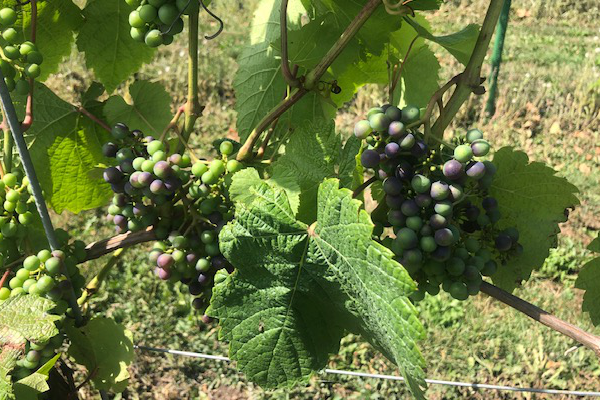
    During August we start to see our grapes undergo what is known as veraison. This is easier to spot in red grapes as the fruit itself starts to turn from green to purple when the chlorophyll is replaced with anthocyanin. But veraison happens to both white and red varieties. It is the point in the lifecycle of the vine when energy is put into ripening and sweetening the grapes and the acidity level decreases.

    We spotted the first signs of veraison in the Rondo and Regent grapes during our vineyard check on Monday 1st August. Last year, we did not see the first signs of veraison until 10th August. From the point of veraison, it will be anywhere between 30 and 70 days until the grapes are ready to harvest and can be made into wine. The earlier the veraison, on the whole the earlier the harvest, particularly if the weather continues to be warm and sunny. After veraison, we continue with the leaf stripping to expose the grapes to encourage further ripening.

  2. Changes to the leaves
    When the grapes are ripening, they start to take the energy out of the leaves. The leaves will begin to turn red and orange, but still have nice green veins. The vineyard might begin to see an increase in the number of birds or insects visiting, looking for a tasty treat. This is why, once we have finished with leaf stripping, we bring down the nets to stop all our sweet grapes being eaten by the local wildlife!


Step-by-step guide to checking the sugar levels in the grapes

Once we can see that the grapes are looking really ripe, we need to take a more scientific approach. This is detailed in our blog Grape Expectations, and you can read it here.


Vineyard Vignette: August

A bit of a trim to keep our vines in top condition

During August we work hard to get our growing vines and grapes in the best condition to ensure that we get the best crop when it is harvest time.

We have been going up and down the rows, vine by vine, selecting shoots that are ideally a hand-span apart for fruiting this year. We also select shoots that will be suitable as arms for next year, to ensure that we will have some in the correct position and of the correct thickness. We then remove the excess shoots to reduce crowding and to concentrate the vine’s energy into those remaining. It is meticulous work, as we need to be very careful not to break any selected for this year’s growth or next year’s arms. If we get it right, our vines will be in a much stronger position to produce the best crop possible.

We have also been removing a few of the leaves around the fruit zone to expose the flowers. We take off the bigger, darker leaves, as these are older and will be replaced by fresh new leaves anyway. This needs to be completed on every vine in the vineyard before the second set of fruiting wires can be raised.

This canopy management is vital, and ideally should happen before flowering commences or the vines will not get the essential sunlight and airflow that will ensure the fruit is able to grow. Unlike in warmer wine-producing countries, the damper, slightly cooler climate here in the UK means that, without such canopy management, we are more susceptible to diseases such as mildew that can blight an entire crop.

This month we have also seen the first signs of veraison in the vineyard. This is when the vines start to put energy into ripening and sweetening the grapes. This is more obvious in our red varieties, as the grapes start to change in colour from green to purple, but it happens to both red and white grapes. From the point of veraison, it will be anywhere between 30 to 70 days until the grapes will be ready to harvest.


Stock up for August bank holiday

The August bank holiday is fast approaching, and good weather should give plenty of opportunity for a BBQ, picnic or day out. So, why not stock up on your favourite drinks for the long weekend?


Menu of the month: March

Eggs Royale with smoked trout

Serves 1

Ingredients

For the Hollandaise sauce

  • 125g butter
  • 2 egg yolks
  • ½ tsp of white wine vinegar
  • Squeeze of lemon juice
  • Pinch of cayenne pepper

For the Eggs Royale

  • 1 English muffin sliced in half
  • 2 slices of smoked trout
  • 2 eggs

Method

Melt the butter in a small saucepan and keep it warm.

Put the egg yolks, vinegar, a pinch of salt and a little cold water in a glass bowl that will fit over a small pan (to make a bain-marie). Whisk for a few minutes before putting the bowl over a pan of just simmering water and whisk continuously for about three to five minutes until it thickens.

Remove from the heat and slowly whisk in the melted butter, a little at a time, until it is all incorporated. If it gets too thick add a little water. Season with lemon juice and cayenne pepper.

Lightly toast the muffin and poach the eggs. Top each half of muffin with a slice of smoked trout, a poached egg and spoon over the warm Hollandaise.

*To save time, and if young children are helping to make this special dish, shop-bought Hollandaise sauce can be used. Just warm gently in a small saucepan before spooning over the poached eggs.

Serve with a glass of Poulton Hill Vineyard’s Bulari sparkling white wine.